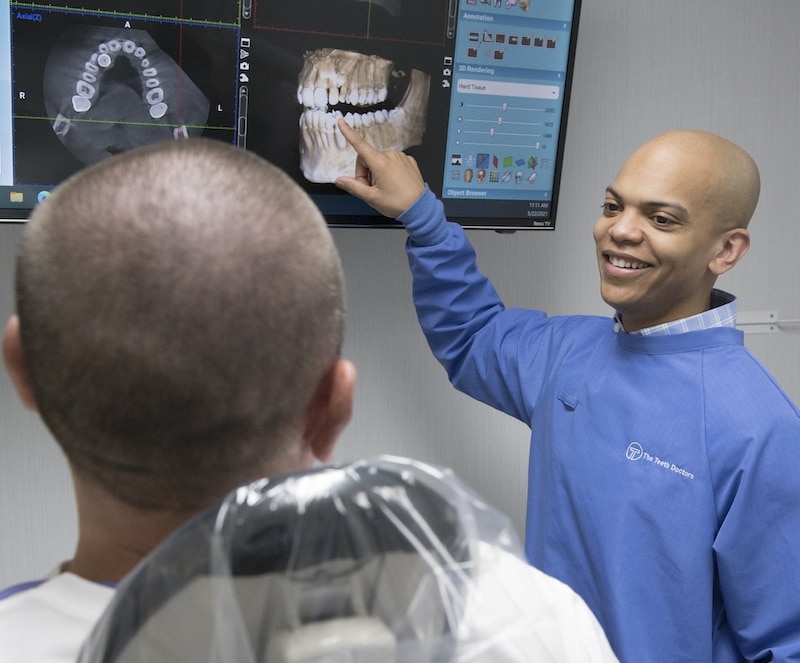

Implant-supported overdentures fix the daily problems that conventional dentures cause: slipping when you eat, clicking when you talk, soreness from rubbing, and the gradual face changes that come from long-term denture wear. Instead of resting on your gums, the denture clips onto two or more small implants placed in your jawbone. It stays put, the implants preserve your bone, and you stop worrying about chewing the food on your plate. The Teeth Doctors is at 6402 Yadkin Road in west Fayetteville, roughly 15 minutes north of Hope Mills via the All American Freeway. Dr. Jeremiah Davis holds advanced implant credentials including Diplomate of the American Board of Oral Implantology, held by only eight dentists in the entire state of North Carolina.
Why Hope Mills Patients Choose The Teeth Doctors
Hope Mills is a Cumberland County town about 8 miles south of our office. The drive takes 15 to 20 minutes depending on the time of day and which side of Hope Mills you start from. It is the same county, the same general community, and an easy shot up the All American Freeway. Many Hope Mills patients tell us the drive feels like a normal across-town trip.
What you are choosing when you drive 15 minutes for overdenture care is a practice that has built its identity around implant work specifically. Overdentures involve both surgery (placing the implants in your jawbone) and prosthetics (designing and fitting the denture that clips onto them). Cases tend to fail when one half of that work is handled with less attention than the other. Dr. Davis plans both halves of every case personally and brings credentials in implant dentistry that are uncommon at the general-practice level.
Implant Credentials Worth the Short Drive
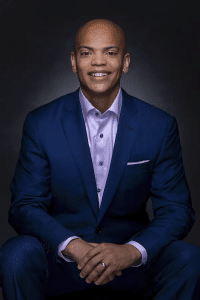
Dr. Jeremiah C. Davis, DDS, MBA, holds the following credentials:
- United States Army veteran, 82nd Airborne Division
- Master of the Academy of General Dentistry (MAGD), held by fewer than 2 percent of general dentists in the U.S. and Canada
- Diplomate of the American Board of Oral Implantology (DABOI/ID), held by only 8 dentists in the entire state of North Carolina
- Fellow of the American Academy of Implant Dentistry (FAAID)
- Master of the International Congress of Oral Implantologists (MICIO)
- Master of the Academy of Osseointegration (AO)
- Surgical Master of the Interdisciplinary Dental Education Academy, held by only 8 dentists in the United States
- Dawson Academy Scholar
- Named one of America's "Top 40 Dentists Under 40" by Incisal Edge magazine
- DDS from UNC Chapel Hill School of Dentistry, MBA from UNC Kenan-Flagler Business School
Dr. Davis served as a captain in the U.S. Army's 82nd Airborne Division at the installation now known as Fort Bragg, then completed dental school at UNC Chapel Hill and an MBA from UNC Kenan-Flagler. He built the practice in Fayetteville and stays involved in community causes through the giving-back program.
What Are Overdentures?
An overdenture is a removable denture that snaps onto dental implants placed in your jawbone. It looks similar to a conventional denture from the outside but locks into place when worn. You can still take it out for cleaning. You do not need adhesive paste. The implants underneath stimulate your jawbone the way natural tooth roots would, which slows the gradual bone loss that long-term denture wear causes.
Most overdenture patients are missing all or most of their teeth in an arch. Others are converting from a conventional denture that has become loose because the underlying bone has resorbed over years. Overdentures cost less than fixed full-arch solutions like All-on-4 because they typically use 2 to 4 implants per arch rather than 4 to 6, and the prosthetic is removable rather than permanently fixed.
Implant-Supported vs. Tooth-Supported Overdentures
Implant-supported. Two to four implants placed in your jawbone anchor the denture. Default option for patients missing all the teeth in an arch.
Tooth-supported. If a few healthy natural teeth remain in good positions, those teeth can be prepared as anchors instead of placing implants. Preserves your remaining teeth. Whether this fits your case depends on the position and root health of the remaining teeth.
Your Overdenture Treatment Plan
- Consultation and CBCT scan. Clinical exam, 3D imaging, goals discussion, written cost estimate.
- Treatment design and surgical guide. Implant positions mapped before any surgery.
- Implant placement. Local anesthesia, with sedation available; 60 to 90 minutes per arch.
- Healing period. 3 to 6 months. Interim denture during this time.
- Final impressions and overdenture fabrication.
- Delivery, adjustment, and follow-up visit a few weeks later.

Caring for Your Overdentures
- Daily removal and cleaning with a soft brush and non-abrasive cleaner.
- Brush around the implant abutments and remaining gum tissue with a regular soft toothbrush.
- Soak the denture overnight in water or denture-cleaning solution. Avoid hot water.
- Twice-yearly cleanings and attachment checks at our office.
- Call right away if anything feels loose or causes irritation.
Hope Mills Overdentures Office Tour
Hope Mills Patients Frequently Ask
How far is The Teeth Doctors from Hope Mills?
Roughly 8 miles. Drive time is 15 to 20 minutes via the All American Freeway. Easy in-county trip for most Hope Mills residents.
How long is the full treatment timeline?
Most patients are 4 to 7 months from consultation to final overdenture delivery. The bulk of that time is the 3 to 6 month healing period for implant integration. You wear an interim denture during healing so you are never without teeth.
Will my insurance cover any of this?
Most dental insurance plans cover a portion of the denture itself. Coverage for the implants varies by plan. We run your benefits before any treatment and provide a written cost estimate. CareCredit financing and the Friends and Family Membership Plan are available for patients without insurance or with limited coverage.
How long do the implants last?
The implants themselves typically last 20 years or more with good hygiene and twice-yearly checkups. The denture may need a reline every 5 to 7 years, and the snap-in attachments inside the denture need replacement every 1 to 3 years (quick chair-side swap).
What happens if my bone has shrunk too much for direct implant placement?
We see this often in patients who have worn conventional dentures for years. If bone volume is too low for immediate implants, we can typically build up the area with a bone graft and place implants a few months later. The 3D scan at consultation tells us which path your case will take.
Schedule Your Consultation
Call 910-864-4646 or use the appointment form. The consultation includes a clinical exam, 3D CBCT scan, full options discussion, and a written treatment plan and cost estimate.
Hear From Real Patients...


Schedule today!
(910) 864-4646
6402 Yadkin Rd.
Fayetteville, NC
Complete New
Patient Forms